Pages

Thursday, 7 February 2013

India out of Women's World Cup

By Stephan Shemilt BBC Sport in Mumbai Hosts India were knocked out of the Women's World Cup with a 138-run defeat by Sri Lanka in their last group match.

Chasing 283, India would have secured a place in the Super Six stage on net run-rate had they made at least 251, but they crumbled to 144 all out.

Sri Lanka, the lowest-ranked team in the tournament, who also stunned England in their opening match, had never beaten India in one-day cricket.

Sri Lanka, England and West Indies take two points through to the Super Sixes.

The top three teams in each group qualify Each team plays three games against the qualifiers from the other group, while carrying through their results against the qualifiers from their original group There are no semi-finals - the first and second-placed Super Six teams progress straight to the final on 17 February There are also play-offs for third/fourth, fifth/sixth and seventh/eighth Sri Lanka captain Shashikala Siriwardene said she hoped Indian fans would embrace her side as the last Asian side left in the tournament before her media conference was interrupted by a call from the nation's president, Mahinda Rajapaksa.

"He said he'd never seen a match like this and wanted to congratulate us," said Siriwardene. "He wished us luck for the rest of the tournament."

England had sealed their progress with their earlier win over West Indies, but required India to advance for them to carry forward the maximum of four points.

Group B sides Australia, New Zealand and South Africa are the other three teams to advance.

After finishing bottom of Group A, India will take on Pakistan in a play-off to determine seventh and eighth place.

Protests from a right-wing political party against Pakistan's presence in Mumbai caused all their fixtures to be moved to the city of Cuttack, about 1,000 miles away.

India must now travel to play that game on Thursday, the day before the Super Six stage begins.

"I really didn't think we would we be in these circumstances at the start of the tournament," India captain Mithali Raj told BBC Sport.

"It's very disappointing to be out of the tournament. I can't sum up what my team is going through after this defeat."

Raj had previously suggested the tournament was an opportunity to advance the women's game in India, and conceded that the chance had been missed.

"It was an occasion for us to do well in front of a home crowd," said the 30-year-old batter. "To get the sport the kind of awareness, marketing and publicity it needs, this was a big opportunity for us."

Raj began the tournament as the number-one ranked batter in the world, but managed only 29 runs in three innings.

"I don't play the game for rankings, but it's more important for me how many runs I score for my country," she said. "I can't talk about the future but, as a team, we will take a little while to come out of this disappointment."

On her future as captain, she added: "That is the call of the selectors."


View the original article here

No distractions for England - Marsh

By Laura Marsh England all-rounder Venues: Mumbai and Cuttack, IndiaDates: 31 January to 17 FebruaryCoverage: Ball-by-ball commentary on all of England's games and the final on BBC Radio 5 live sports extra & online; live text commentary on the BBC Sport website & mobiles

The World Cup only comes around every four years and, now it's arrived, we're all very excited.

We have been in India for about two weeks - preparing at a training camp in Pune before moving to our base in Mumbai. Before we came here everyone was training hard but scattered across the UK so it was fantastic to get back together as a team.

Danielle Hazell Danielle Hazell took 5-41 against New Zealand

The eight days in Pune involved lots of nets, middle practice and fielding drills. We had some brilliant net bowlers who were happy to bowl at us all day, giving us valuable practice on the slow, turning Indian wickets.

After that, two warm-up matches back in Mumbai gave us the first chance to play together as a team since the World Twenty20 in October.

The win against South Africa was followed by a narrow defeat by New Zealand - despite Danielle Hazell taking 5-41 - but that loss is not concerning because, as a team, you want to improve as a tournament progresses.

Captain Charlotte Edwards is in great form with the bat and showed that against South Africa with a solid 78, while we have also seen some decent contributions from Lydia Greenway and Heather Knight.

Admittedly, there was a little bit of rustiness, but that's to be expected as we've come out to play in our off-season, so there are areas to improve on. Ultimately, though, the World Cup begins for us against Sri Lanka on Friday and I am very confident we will put on a good show.

India and West Indies are also in our group, then, hopefully we will progress to the Super Six stage where Australia and New Zealand are likely to be among the teams that await.

All of these sides have the ability to win the World Cup, so I think much will depend on who deals best with the conditions and who is able to execute their plans in the pressure situations a tournament throws up.

1 February v Sri Lanka 3 February v India 5 February v West Indies

The first two matches will be played at the Brabourne Stadium in Mumbai with the third game at the Bandra Kurla Complex, also in Mumbai.

If England finish in the top three in their group they will advance to the Super Six stage.

Those conditions I speak of make India renowned for being a tough place to play cricket, but it's also a fantastic country to tour.

Of course, it's hectic, so different from back home. If you think the traffic in London is bad, it's nothing compared to Mumbai.

The bus journey to Pune we were told would take two hours but actually took five, with the crazy driving of the man behind the wheel drawing screams from the girls at various points during the journey.

I hid away at the back, so I could not see too much of what was going on, but I could feel the bus shaking as we climbed some pretty steep mountains. It was interesting to say the least, but we survived.

As well as traffic chaos, you get used to some pretty random sights, like cows wandering across the road. There is always something different happening here, so that keeps you on your toes.

It is, though, slightly harder to get around in India than some other countries we might tour, so it is important we have other ways to keep ourselves entertained.

All of the girls are different. Danielle Hazell has a games console with her, while I'm quite into the TV shows Homeland and Dexter, so Heather Knight and I have been having some nights in with a DVD.

None of this, though, is a distraction from what we came here to do, which is defend the World Cup that we won in 2009. The waiting is almost over.


View the original article here

Irresistible Meets Unstoppable. Who Wins?

It's such a tantalizing question: What if an irresistible object crashes into an immovable object, what happens? Would the unmovable move? Would the irresistible be resisted? Which one would prevail? Somebody must have thought about this, must have an answer.

Well, someone has. It's Henry Reich, who's been writing/narrating/drawing Minute Physics videos at the Perimeter Institute For Theoretical Physics in Waterloo, Canada, and attracting enormous crowds because his short animated explanations really do explain. In this one, Henry introduces us, with a few careful amendments, to something that Won't Be Moved, then to Something That Won't Stop Moving. They are set on collision course and we get to watch, step by step, what happens. You'll want to stay to the finish, because the end is like nothing I'd imagined.

There may be a few equations that fly over your head, but the drawings are so intuitive, so quietly compelling, I was able to follow the action all the way through.

Stop. Don't read this until you've watched the video...

About the last bit? Frankly, once we kicked gravity out of our equations, and got those two infinitely massive unacceleratable gift boxes heading for each other, I was expecting a crash — a big, universe-ripping crash. But when Henry pulls out a dictionary and reveals a law of nature I'd never heard of — all of a sudden those "infinitely massive" gift boxes become a pair of friendly ghosts, of the Casper variety, that can't be bumped into. I was, I confess, a little disappointed. It's like going to see two heavyweights of the Ali or Frazier class, and finding them weirdly transformed into lightweights — too light to land or take a punch. I'm not sure how to react. Should I ask for my money back, or should I think the universe is just wonderfully weird?

I think I'll go for ... weird.


View the original article here

Momentum with England - Shrubsole

By Stephan Shemilt BBC Sport in Mumbai Venue: Brabourne Stadium, MumbaiDate: Friday, 8 FebruaryTime: 03:30 GMTCoverage: Ball-by-ball commentary on BBC Radio 5 live sports extra & online; live text commentary on the BBC Sport website & mobile devices

Pace bowler Anya Shrubsole says momentum is with England after the defending champions qualified for the Super Six stage of the World Cup.

England bounced back from losing to Sri Lanka with wins over hosts India and West Indies to reach the next phase.

"There are always things you can improve on, but we'll head into the Super Six with some confidence," Shrubsole told BBC Sport.

"We're gaining momentum now after earning some good wins."

England secured their place in the next phase with a six-wicket win over West Indies and finished top of their group on net run-rate despite Sri Lanka's crushing victory that knocked hosts India out of the tournament in the group's final match.

Charlotte Edwards' side will take on World Twenty20 champions Australia in Mumbai on Friday in the first of their three matches in the Super Six stage.

They take two points through from the group stage courtesy of their victory over West Indies, the third team to qualify from their group.

The top three teams in each group qualify Each team plays three games against the qualifiers from the other group, while carrying through their results against the qualifiers from their original group There are no semi-finals - the first and second-placed Super Six teams progress straight to the final on 17 February There are also play-offs for third/fourth, fifth/sixth and seventh/eighth England took advantage of West Indies' decision to bat first in seam-friendly conditions on Friday and bowled the Caribbean side out for 101 at Mumbai's Bandra Kurla Complex.

"We were a little surprised," said Somerset seamer Shrubsole, who took career-best figures of 4-21.

"We were keen to bowl first if we won the toss because we've seen that the ball moves around in the matches that start early."

Shrubsole was pleased with her performance, particularly after India captain Mithali Raj said that England rely too heavily on new-ball partner Katherine Brunt .

"Mithali said a lot about Katherine being the only threat, but we have a lot of belief," added 21-year-old Shrubsole.

"It's not just me, it's the spinner as well. We know we've got a world-class bowling attack here and we backed that up again today."

West Indies captain Merissa Aguilleira said she regretted the decision to bat first on a green pitch covered in morning dew.

"If I was given the chance again we would have bowled first," said the wicketkeeper. "The conditions were suited to bowl so that was a decision that could have gone differently."

As well as Australia, England will face South Africa on Sunday and New Zealand on Wednesday. The final will be played on 17 February.


View the original article here

India's changing attitude to women's cricket

By Stephan Shemilt BBC Sport in Mumbai Think India, think cricket.

Each day in Mumbai every grassy space is occupied by some sort of cricketing contest. Men's cricket, that is.

However, from India women's captain Mithali Raj to children of the slums of Mumbai, there is hope that the country's attitude to the sport is changing.

“If matches are televised on a regular basis I'm sure women's cricket in India will catch up”

Mithali Raj India women's captain While in many ways India has become the game's modern home, it faced accusations of being behind the times during the scheduling controversy that marred the run-up to the Women's World Cup.

Yes, political pressures made it necessary for Pakistan's games to be moved from Mumbai, but the decision to evict the women from the city's biggest stadium, the Wankhede, to accommodate the men's Ranji Trophy final, left a sour taste.

Furthermore, not one of those games that take place in Mumbai's parks appear to involve any women. England are assigned some local youngsters to bowl at their net sessions, but a girl is yet to be spotted.

So, when England trio Holly Colvin, Danielle Wyatt and Tammy Beaumont gave a coaching session to some Mumbai schoolchildren, it came as a surprise that the group who arrived at the Cricket Club of India (CCI) was made up entirely of girls.

That, though, was only part of the story. Helped by Room To Read - an international charity focussing on literacy and gender equality in education - these girls had come from the slums of Mumbai.

"For them, this opportunity is like touching the heavens," said Room To Read's Neelima Naik. "When they knew England were coming here, they practised for three days.

"They said 'we are having England players play with us, they shouldn't feel we are not good enough'.

"They look at the likes of India captain Mithali Raj as a role model and are dreaming of being like her. The entry to CCI could be the first step."

India's best finish in the women's World Cup was as runners-up to Australia in 2005.

However, despite the enthusiasm of an inspirational figure such as Neelima, one cannot help but wonder that, even if these girls possess the talent, Indian attitudes to women and women in sport would hold them back.

As the World Cup began, former India captain Diana Edulji described the Board of Control for Cricket in India's approach to women as an "insult". 

She explained the fee for woman playing in a domestic one-day match was 2,500 Rupees (£30) and only 1,250 Rupees (£15) for a Twenty20.

"It's well known that boys still get more opportunities and support in both sport and education. The culture of India is male dominated," said Neelima.

"It's still a big thing for a girl child to be allowed to go to school. She could instead be cleaning the home, looking after a sibling or earning money.

"But I am seeing a little change of attitude. There are growing opportunities and even the government is trying to support girls' development. The mental make-up is still that the girl has to do housework, but that is changing."

When the group of a dozen or so girls have finished their lesson in cover drives and dancing Gangnam Style from Colvin, Wyatt and Beaumont, two are introduced through Neelima's interpreting.

Mithali Raj Mithali Raj has scored 4,499 runs in 143 ODIs

Fifteen-year-old Radha explains that her parents are vegetable vendors. Leena, who is 14, says that her parents are domestic servants. Both are incredibly excited to be asked to speak, but their manners are impeccable.

"Very rarely do we get the chance for cricket because mum feels we should not play," says Radha. When asked about who their hero is, the response is predictable. "Sachin Tendulkar," is proclaimed through wide smiles. What about Raj? "Yes, Mithali," but the answer is not quite as convincing.

Later that afternoon, media gather to put questions to Raj, the undoubted face of women's cricket in India. The second surprise of the day is that at this press conference there are more female journalists than male.

The journalists explain that the Women's World Cup would not really register in India if it was not the host - there is little around Mumbai promoting the tournament, but TV adverts featuring men's spinner Ravichandran Ashwin urge the nation to get behind Raj's team.

They do, however, point out the ramped-up coverage in the newspapers. Broadsheets The Times of India and The Hindu both have half-page spreads devoted to the World Cup, complete with pictures of Raj and team-mate Thirush Kamini. It's unheard of.

"It's a big event, the World Cup attracts a lot of people and media coverage," says Raj.

"People always come up to me to ask about who we are playing and when so that they can follow the performances of the team.

"If matches are televised on a regular basis I'm sure women's cricket in India will catch up."

It's a vision that Neelima shares.

"I hope that one day women cricketers in India are greeted and welcomed everywhere they go," she said. "That we have women's cricket on television and people stay at home to watch.

"That is the dream for all of us."


View the original article here

Lasting damage of the 100mph ball

16 January 2013 Last updated at 01:22 GMT By Greig Watson BBC News (Clockwise from top left) Bert Oldfield hit by a ball at the Adelaide Oval, statue of Harold Larwood, the Ashes urn, Bill Woodfull hit at the Adelaide Oval, Australia graphic, Douglas Jardine, Nottingham newspaper coverage of the Adelaide test The Bodyline scandal helped shape the nature of cricket, sport and relations between Australia and England for years to come As Australian batsman Bert Oldfield collapsed, his skull fractured by a lightning-fast ball, the booing from the 50,000-strong Adelaide Oval crowd became a deafening howl.

The England players, mouths dry with fear, looked for escape routes - or even potential weapons - in case the mob fell on them.

Bowler Harold Larwood, the focus of the fury, turned to team-mate Les Ames. "If they come," he said, "you can take the leg stump for protection - I'll take the middle."

Never before or since that moment, 80 years ago to the day, on 16 January 1933, had cricket - and arguably any other sport - seen a contest which fired such anger, which reached so far and echoed for so long, as the Bodyline tour.

Bodyline ball compared to standard ball Bodyline used a more aggressive but still legal method of bowling.

"In Australia to this day, the word Bodyline carries the stench of underhand or unsportsmanlike behaviour; with the series regarded as Australian cricket's most controversial," said David Studham from the Australian National Sports Museum.

The view of the MCC, which organised the tour, is slightly different. The curator of its museum, Adam Chadwick, said: "Was Bodyline unsportsmanlike? By the standards of the day, yes. By the standards of now, it was a stroke of genius."

'Devastatingly fast'

At the beginning of the 1930s, the MCC - Marylebone Cricket Club - still ruled the cricketing world from its seat at Lord's in London.

But it had a problem, in the shape of batting phenomenon Don Bradman.

During their 1930 tour of England, Australia - the arch rivals - had dominated the home bowlers, with Bradman averaging a staggering 139.14.

The MCC looked to austere amateur player Douglas Jardine for an answer, making him England captain.

Jardine believed Bradman struggled against balls which bounced into his chest and formed a tactic to exploit this. But the plan needed the right bowler, and that bowler was former Nottinghamshire miner Harold Larwood.

Duncan Hamilton, Larwood's biographer, said: "He had two things. Firstly he was incredibly accurate, he claimed never to have bowled a wide in his career, and accuracy was essential to Bodyline.

Harold Larwood (l) and Don Bradman Cricket genius - Larwood and Bradman duelled during Bodyline but faced very different fates in the years that followed

"Secondly he was devastatingly fast. All his contemporaries said he was the quickest they had faced. At certain times during that series he must have got close to, if not passed, the 100mph (160km/h) mark.

"Every fast bowler who sees that old footage says, 'Wow, that's quick!'."

Jardine's plan was to use what was known in England as leg theory. Bowling fast, high-bouncing deliveries on the line of the leg stump of the wicket - where a batsman would usually stand.

The batsman had three choices: to move but risk exposing his wicket, to play the ball with his bat and face being caught by a ring of close fielders, or try to duck and risk painful blows.

The tour began in earnest at Sydney in December 1932, ironically without Bradman playing. Bodyline brought England victory.

Continue reading the main story

Bodyline introduced a previously unspoken element into Test cricket - namely the physical intimidation of the batsman.

The placement of fielders, deliberately positioned to catch the ball from batsmen protecting themselves from short, fast deliveries aimed at the ribs and throat, was entirely legal at the time, but seriously threatened the code of sportsmanship that is so central to cricket.

That said, the Australian administrators - who made such a meal of Jardine's tactic at the time - were noticeably quiet when their own fast bowlers Dennis Lillee and Jeff Thomson were terrifying batsmen with short-pitched bowling in the 1970s.

The authorities acted swiftly after the Bodyline tour to limit the placing of fielders in catching positions on the leg side in an attempt to deter a repeat of the tactic, and also brought in a restriction of the number of bouncers that can be bowled in a single over.

But after Lillee and Thomson, the West Indies' formidable pace attack of the late 1970s and 80s also proved that skilful, intimidatory fast bowling is every bit as effective as Bodyline, even with field restrictions and after the introduction of helmets.

Complaints about the tactic quickly appeared. As the bruises and wickets mounted, the disquiet turned to anger, with claims batsmen were being physically targeted.

'Vicious' bowling

Despite Australia levelling the series at the second match in Melbourne, the repeated blows to lightly protected players attracted outraged headlines.

Some batsmen endured hours of punishment and even Bradman looked unsettled.

Mr Studham said: "The tactics employed by Jardine roused intense passions, as they were so out of accord with anything that had previously happened on the cricket field.

"Targeting the bowling along the line of the batsman's body was regarded by the Australian crowds as vicious, unsporting and especially after repeatedly battering the batsmen, 'hitting a man when he was down and certainly no part of cricket'."

Police protection

With everything to play for, and feelings running at fever pitch, the Adelaide match opened in front of packed stands.

Cricket bible Wisden would later call it "probably the most unpleasant Test ever played".

Australian captain Bill Woodfull was left staggering after being struck just above the heart by Larwood.

The booing lasted for three minutes, despite the fact England had not yet deployed Bodyline tactics in the match.

That would change though, moments later, when Jardine called out to Larwood: "Well bowled Harold," and set the fielders in the hated Bodyline formation. Police had to be deployed on the boundary.

The next day, Oldfield had his skull cracked and Larwood had to be escorted from the ground.

Continue reading the main story In ethics, the concept of fairness involves treating everyone equally and impartiallyFair play is usually understood to mean using only tactics that are in accord with the spirit of the sportFair play is not just about keeping to the rules, but also self-control, courage and persistence

Source: BBC Religion & Ethics

It was almost inevitable the problems would overflow from the playing field. But no-one could have predicted it would lead to three events then unthinkable in cricket.

'Hysterical' reaction

MCC tour manager Pelham Warner, seeking to smooth relationships, was sent packing by the normally placid Woodfull with what were, for some years, the 25 most famous words in sport.

"I don't want to see you, Mr Warner. There are two teams out there. One is trying to play cricket and the other is not."

The comment, made in the previously sacrosanct dressing room, was then leaked to the press.

The next day, Australian Board of Control for International Cricket sent a cable to the MCC which described England's tactics as "unsportsmanlike", the ultimate taboo for guardians of the game.

Mr Chadwick said: "The MCC reacted with incredulity to the Australian messages that the tactics were unsportsmanlike and they felt it was really out of the question that an MCC team led by a gentleman of Douglas Jardine's character could possibly behave in such a manner.

"The archives really do show the feeling was 'Oh, the Australians are being a bit hysterical about it'."

Bodyline field in place The Bodyline fielding positions - crowding the batsman on the leg-side in the hope of catching deflected balls - were later outlawed

But the situation spiralled. Jardine threatened to withdraw his team from the remaining two matches unless the allegation was retracted.

Stoked by newspaper reports, each country backed its own players.

The standoff only ended when Australian Prime Minister Joseph Lyons told the cricket board a British boycott of Australian goods could cripple the country.

England won the series 4-1. Bradman's batting average was cut to a merely excellent 56. But the shock lasted for years.

'National disdain'

Mr Studham said he felt Bodyline was one of those sporting "rite of passage" stories all Australian children learn about.

"The on-field tactics and resulting carnage at the third Test in Adelaide split already strained relations between the teams, the game's governing authorities, and even threatened to split the governments.

"While perfectly legal at the time, it left lasting ill-feeling in Australia where it was seen to be outside the spirit of the game.

"The fact that a few years later the laws of cricket were amended to ban Bodyline bowling contributed greatly to its continuing national disdain."

Mr Chadwick said: "The MCC did not have any advance warning of the tactics which Jardine was using and wasn't really aware of the impact - all they were getting was newspaper reports and telegraph messages of the score.

"When they saw it for themselves they realised this really wasn't the sort of cricket they had always set themselves up to promote as containing the best values of Britishness and gentlemanly fair play."

Jardine retired from first class cricket the following year. Larwood's agony was more extended.

Hated hero

Injured through over-bowling, he was then stunned at his treatment by cricket's hierarchy.

Mr Hamilton said: "He was totally betrayed by the establishment. They treated him like toxic waste.

"He was asked to apologise and he rightly refused, saying he had done what his captain had asked. He got no support for his injury.

"On his return to Nottingham he was met by cheering crowds 10,000-strong. He went from that to being vilified. The whole thing was a tragedy."

Larwood never played for England again. On the advice of some of his old Bodyline foes, he emigrated to Australia in 1950 - becoming firm friends with Bert Oldfield.

He was appointed MBE in 1993, at the age of 88. A statue of him was unveiled in Kirkby-in-Ashfield, close to his birthplace, in 2002.


View the original article here

Silica Rule Changes Delayed While Workers Face Health Risks

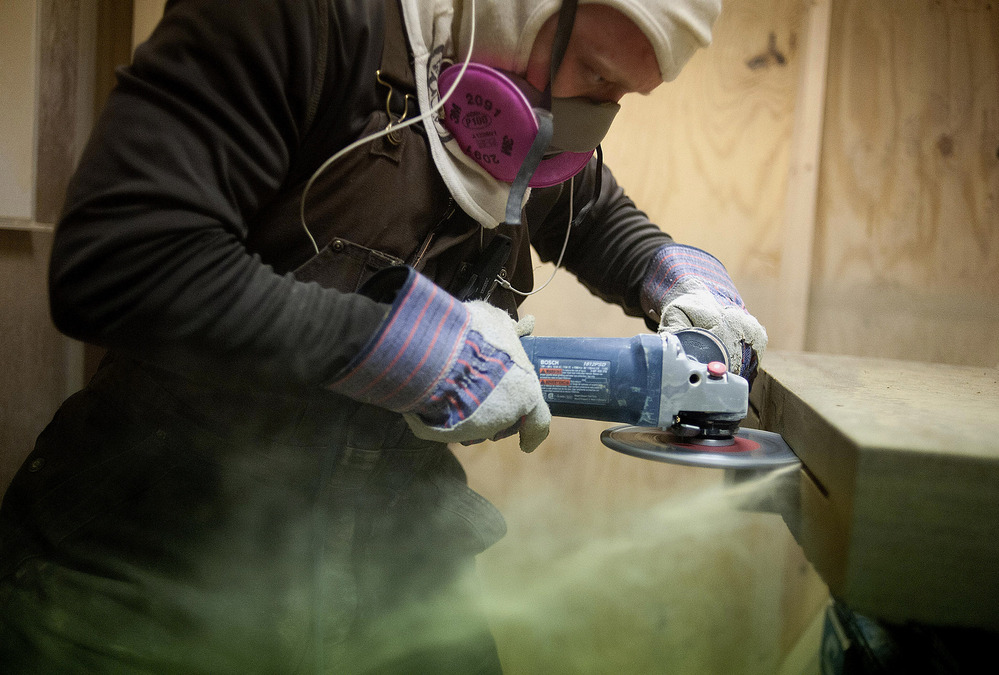
A worker makes a cut in the side of a sandstone block at the Cleveland Quarries facility in Vermilion, Ohio, earlier this month. The legal limit on the amount of silica that workers can inhale was set decades ago.

Ty Wright/Bloomberg via Getty Images A worker makes a cut in the side of a sandstone block at the Cleveland Quarries facility in Vermilion, Ohio, earlier this month. The legal limit on the amount of silica that workers can inhale was set decades ago. A worker makes a cut in the side of a sandstone block at the Cleveland Quarries facility in Vermilion, Ohio, earlier this month. The legal limit on the amount of silica that workers can inhale was set decades ago.

Ty Wright/Bloomberg via Getty Images

One of the oldest known workplace dangers is breathing in tiny bits of silica, which is basically sand. Even the ancient Greeks knew that stone cutters got sick from breathing in dust. And today, nearly 2 million American workers are exposed to silica dust in jobs ranging from construction to manufacturing.

The legal limit on how much silica workers can inhale was set decades ago. Workplace safety experts say that limit needs to be cut in half — because otherwise, workers face an increased risk of lung cancer, silicosis and other diseases.

And on Valentine's Day in 2011, it looked like a safety agency at the Department of Labor was getting ready to do that. The Occupational Safety and Health Administration (OSHA) sent a proposal for new silica rules to the White House Office of Management and Budget (OMB). The proposal was supposed to get a 90-day review. But almost two years later, it's still under review.

"There has been incredible delay, inexcusable delay, on protecting workers against silica exposures," says Peg Seminario, director of safety and health for the AFL-CIO, a group of 57 unions that represents more than 12 million workers. She says the push for a new silica rule goes way back.

"We had hoped back under the Bush administration it would move, and it didn't. And then we certainly hoped under the Obama administration that a silica standard would move forward," says Seminario. "Unfortunately, it's been stuck over at OMB and the White House now for two years."

The government's own estimates show the impact of waiting, she says.

"Every year this rule is delayed, another 60 workers will die," says Seminario. "That's deaths. That's not to even look at the numbers of workers who will become sick. We still have thousands of new cases of silicosis every year in this country."

Tom Ward, a 44-year-old mason who lives and works in Michigan, knows just how bad silicosis is. When he was a kid, his dad developed silicosis, after working as a sandblaster. Ward remembers his father coming home one day and collapsing.

"The last day he worked he came in and fell down and pretty much, you know, fell apart basically, and said, 'I can't do it no more,' " says Ward.

This video, produced by the U.S. Department of Labor in an attempt to prevent the occupational disease of silicosis, shows the dangers of exposure to silica dust. It includes the tragic (if not contrived) story of John Steele, "a typical American worker," who was regularly exposed to silica.

His father got the official diagnosis of silicosis at age 34 and died at age 39. "So we watched him slowly suffocate for five years," says Ward.

When Ward grew up and started working as a bricklayer and a mason, he had no idea that the saws and grinders he used were spewing out dust that could expose him to silica — until one day, he took a safety course. "When they went over the respiratory protection is when it really sunk in," recalls Ward. "From that point on, my view on how we cut things at work changed dramatically, to say the least."

He now wonders if he'll develop lung disease. And he worries about the apprentices he teaches at a training center for the International Union of Bricklayers and Allied Craftworkers. He says at construction sites, you can see clouds of dust, but workers aren't going to speak up.

"They're not going to go complain about anything right now, especially with the economic conditions," says Ward. "Everybody is really scared for their job. And they're not going to say a thing about safety."

That's why he wants to see the government take action on silica — to release the proposed rules so they can be publicly debated and then, hopefully, finalized. Last year, he went with other worker advocates to talk with officials at the White House OMB, which is doing the review.

They're not the only ones making their case to officials there. A lot of people don't want to see silica exposure limits cut in half.

Opponents to the new rule include trade associations for the makers of brick, steel and concrete, as well as the producers of sand, stone and gravel. There's also opposition from construction industry groups, like road builders and general contractors.

"The rule would cost manufacturers and the industry as a whole billions of dollars a year that is just not sustainable for manufacturing when employers are looking to hire and create new opportunities for job creation," says Amanda Wood, director of labor and employment policy at the National Association of Manufacturers.

In addition, she points out that silicosis deaths have already dropped more than 90 percent, compared wih decades ago. "So based on these two factors, we do not believe that the rule is necessary," says Wood.

An employee uses a wet saw to cut a slab of sandstone at a Lang Stone Co. facility in Columbus, Ohio, in January. Using water while cutting helps keep dust out of the air.

An employee uses a wet saw to cut a slab of sandstone at a Lang Stone Co. facility in Columbus, Ohio, in January. Using water while cutting helps keep dust out of the air.

Ty Wright/Bloomberg via Getty Images

Marc Freedman, executive director of labor law policy at the U.S. Chamber of Commerce, also opposes OSHA's effort on silica: "I think this is an issue that is not appropriate for revision."

And while some have protested the lengthy OMB review, Freedman says it serves as an important check.

"To the extent that there's this final review that makes sure that OSHA has satisfied the requirements they have to satisfy, that's a very valuable step in the process," he says, noting that "once a proposed rule is published, that very much casts the die in terms of what a final rule can look like."

He and others argue that instead of issuing a new rule, the government should better enforce the existing one.

Inspections that check for silica frequently find employers that are breaking the law, says Brian Turmail, a spokesperson for the Associated General Contractors of America.

"They're finding that firms aren't complying with the current limit about a third of a time," says Turmail. "We're going to get a lot more improvement in workplace safety if we just can work together to make it so that everyone can comply with the current standard than we're ever going to get out of changing the standard to a new and even more unattainable level.

"I think we all want to achieve the same thing, which is a safer workplace," says Turmail, who notes that the employers in his association care about their workers' health. "Our concern is that OSHA's approach isn't going to be effective."

But the guy who runs the Department of Labor's safety agency, OSHA, doesn't buy the arguments from industry.

David Michaels, an epidemiologist who serves as director of OSHA, says the current silica standard is not good enough.

"Even if 100 percent of employers kept exposures at the current standard, silica-exposed workers would still be at increased risk for lung cancer, silicosis and chronic obstructive lung disease," says Michaels.

Exposures have dropped compared with the "terrible" exposures decades ago, says Michaels, "but still there are plenty of people exposed to dangerous levels, and we can't ignore that."

And he says the changes his agency wants will not result in lost jobs. "There will be people who will say that our proposal will hurt employment in the United States, and that's simply not true," says Michaels. "We've looked at the industry analyses, and they're wrong."

Michaels is well aware that some worker advocates are frustrated that the White House review has gone on for almost two years

"Look, I sympathize with those advocates," says Michaels. "The process that the law requires us to go through is a very long and complicated one."

He explains that OSHA has to do extensive studies to show that every industry can comply with the proposed rules without hurting their bottom lines.

"And that's what we've been doing. We've now finished that process," says Michaels. "And we're confident that our proposal meets these requirements."

He expects the proposal to be made public this spring. A spokesperson for OMB said it does not comment on rules under review.


View the original article here