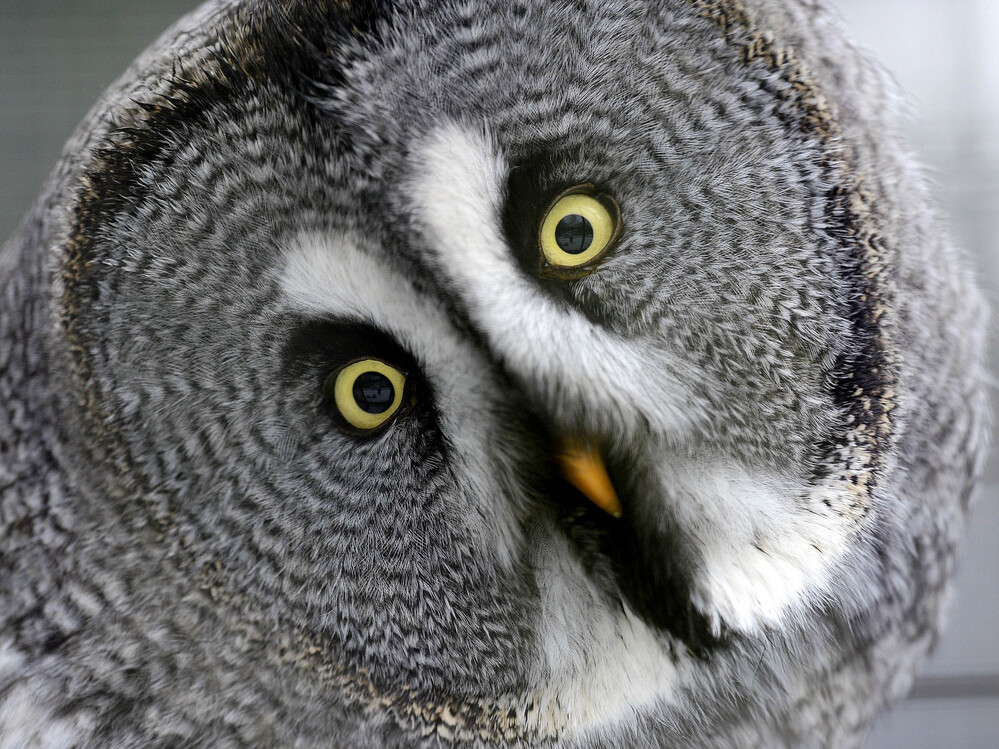
A mystery of the animal kingdom: how do owls turn their heads 270 degrees without damaging their blood vessels? At last an answer, published this week in Science. Fabian de Kok-Mercado and Philippe Gailloud dissected and x-rayed owls to discover how the birds do the twist.
Copyright © 2013 NPR. For personal, noncommercial use only. See Terms of Use. For other uses, prior permission required.
IRA FLATOW, HOST:
Up next, Flora Lichtman is here with Video Pick of the Week, fresh from being the recent winner of the Cyberscreen Film Festival. Well, congratulations, Flora.
FLORA LICHTMAN, BYLINE: Oh, thank you, Ira.
FLATOW: It was for optical illusion piece.
LICHTMAN: Yes. Step into an optical illusion was the winner. Thank you. But, really, I mean, I'm still stuck on dung beetles.
(LAUGHTER)
LICHTMAN: That was amazing. Wasn't that amazing? OK. And there are very, very few animal stories could compete with that - what we just heard on SCIENCE FRIDAY. But I actually think that the Video Pick this week is a contender.
FLATOW: This can do it.
LICHTMAN: I think so. So this question, the question of the Video Pick of the Week is how owls can turn their heads almost full circle?
FLATOW: Really?
LICHTMAN: You've seen. You've - I'm sure...
FLATOW: Yeah, I know I tried it, you know.
(LAUGHTER)
LICHTMAN: Yeah. We can't get much past than 90.
FLATOW: Why can they do and we can't is my question.
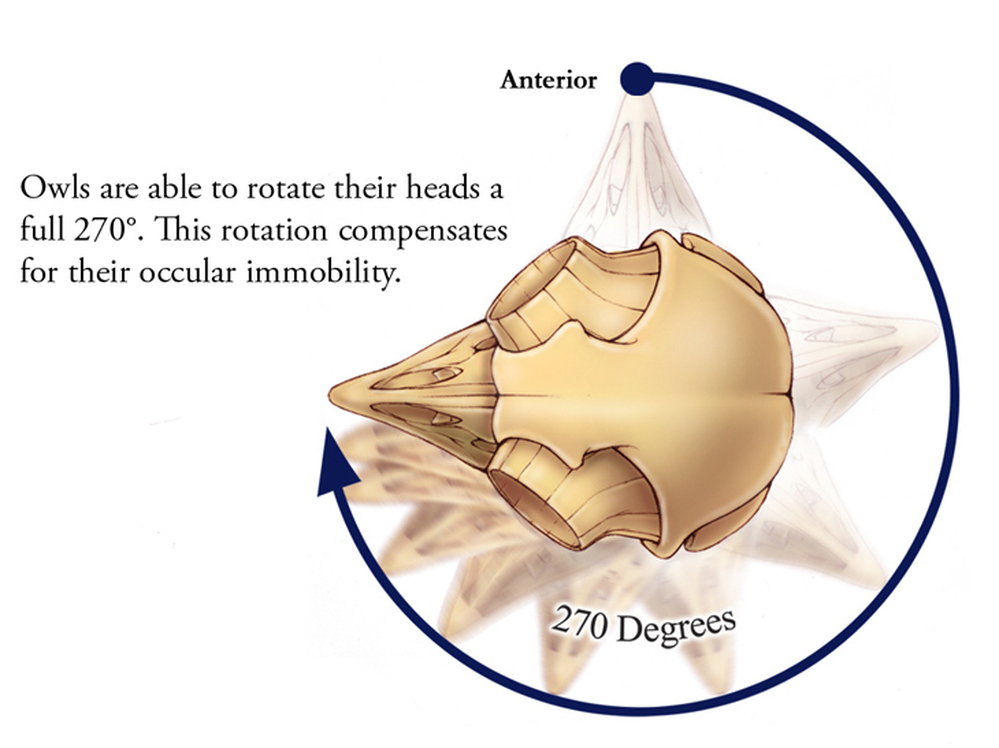
LICHTMAN: Right. So they can do it 270 degrees. If you try right now at home, you're probably doing 90 degrees maybe, right?
FLATOW: Maybe.
LICHTMAN: OK. So there are a few things.
FLATOW: It's a good yoga (unintelligible). Let me just remind everybody this is SCIENCE FRIDAY from NPR.
Flora, continue with the...
LICHTMAN: Well, yes. So there are two things going on here. One is there's a bone difference between owls and humans. And this is already known. Owls have the double the number of vertebrae in their necks than we do. They have 14 and we have seven, and more segments gives them more flexibility.
FLATOW: Right.
LICHTMAN: You imagine, like...
FLATOW: If you play with any of those kid's constructions that...
LICHTMAN: Exactly.
FLATOW: ...you see the more segments you have, the more you can twist.
LICHTMAN: The more you can twist. So we have a bone difference. But the question that intrigued Philippe Gailloud and Fabian de Kok-Mercado was why don't owls get strokes? And Philippe Gailloud actually studies disease caused by artery damage. And so he knows first-hand that in humans, if you tried to turn your head like that, you would damage your blood vessel that would cause a clot and you might get a stroke. And beyond that, let's say that didn't happen, the other problem is that if you twisted your neck that much, your arteries, which bring blood to your brain, important, would be pinched off. So how to the owls get around this? And that's what these researchers looked into this week, and that's what the Video Pick of the Week is about.
FLATOW: Great. So why don't we see dead owls all over the place from turning their neck?
LICHTMAN: Correct. That's exactly what he said. Why are there not dead owls lying all over the forest for was the way that Dr. Gailloud puts it.
(LAUGHTER)
FLATOW: Well, it's a good question, and he answers it.
LICHTMAN: They answered it.
FLATOW: I mean, yeah. Very beautiful graphics in Video Pick this week.
LICHTMAN: Yes. And I can't take credit for those. Fabian and Philippe were actually the winners of this science visualization challenge, some by the NSF and science, and so you can see the full poster on our site or its blog or you can see the video. But basically, they dissected owls. No owls were harmed in the making of this video. They wanted me to assure everyone.
FLATOW: Yeah, they said that.
LICHTMAN: And also they X-rayed them and they put it contrast eyes. And they found this sort of anatomical differences that would allow owls to do this.
FLATOW: One thing that struck you about the video that they sent as well as it struck me.
LICHTMAN: I think struck you. I'm not sure.
FLATOW: Was that right at the beginning of the video, you watch the video and one of the scientists is there and he's got an owl on his arm. And they're absolutely - they look alike. And now you say people look like their pets. He looks — he's standing still. Both their eyes are facing forward and it looks like - just like his owl.
LICHTMAN: I'm not going to go there. There - I will not go there. They are both starring intensely. It's a beautiful - it's beautiful footage. We have Fabian holding this owl and they actually do this trick where they get owl to do the kind of full rotation of the neck. It's really beautiful. They really came through with (unintelligible).
FLATOW: You know what I didn't realize, which he says in it, I didn't realize about the ability to tilt their heads also, not just to go around in circles...
LICHTMAN: Yes.
FLATOW: ...but how high they can tilt up their head.
LICHTMAN: 180 degrees up too, and this maybe partly because of the way that their arteries are. So they -some of their arteries travel through the vertebrate. But there's a lot wiggle room in there and they seem to be arranged so that there are some slack at the bottom, which allows them to kind of more of this maneuvering than you would expect. And then the other thing is that they found when they injected this contrast eye and took these 3-D sophisticated X-rays that the owls actually pool blood at the base of the head.
Their arteries expand. They become these little reservoirs of fresh blood, so that even if the arteries get pinched off, they have access to oxygenated blood while their heads are turned. And they, of course, they need this. They have huge, you know, brains and eyes.
FLATOW: Right. Right. Yeah. So it's a great video. If you want to know how an owl does this, we have the whole thing right there. It's our Video Pick of the Week up there on our website at sciencefriday.com. Also it's up there on YouTube in our SCIENCE FRIDAY YouTube channel. You could watch it there.
LICHTMAN: Absolutely. Go to YouTube or SCIENCE FRIDAY or download our video podcast and you can take SCIENCE FRIDAY videos on the go.
FLATOW: There you go. And it's made by Flora Lichtman, who is now our correspondent and managing editor for video. Congratulations on your appointment.
LICHTMAN: Thank you. Thank you.
(LAUGHTER)
FLATOW: That's about all the time we have for today.
Copyright © 2013 NPR. All rights reserved. No quotes from the materials contained herein may be used in any media without attribution to NPR. This transcript is provided for personal, noncommercial use only, pursuant to our Terms of Use. Any other use requires NPR's prior permission. Visit our permissions page for further information.NPR transcripts are created on a rush deadline by a contractor for NPR, and accuracy and availability may vary. This text may not be in its final form and may be updated or revised in the future. Please be aware that the authoritative record of NPR's programming is the audio.
View the original article here
 How does a great gray owl do that? Now we know.Martin Meissner/AP
  Click image to see full illustration.Johns Hopkins/National Science Foundation